How to distinguish the quality of paper corner protectors
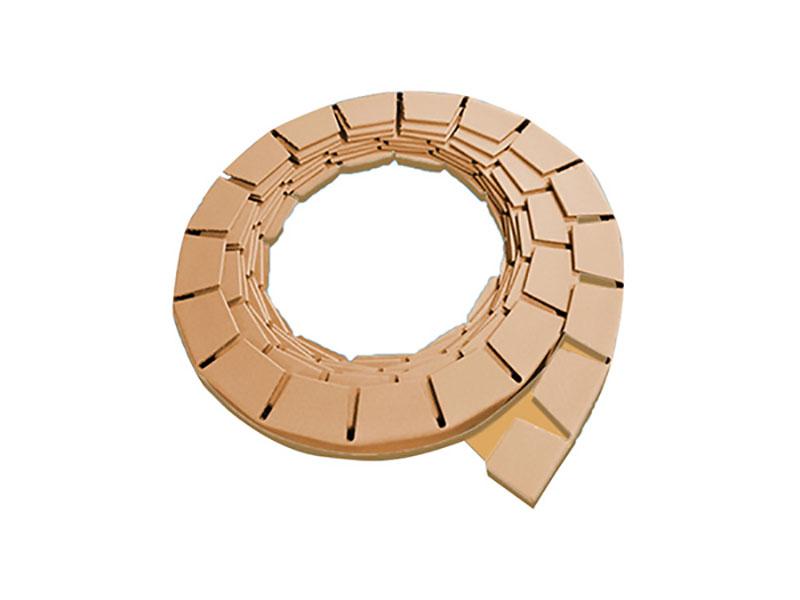
How to quickly distinguish the quality of paper corner protectors
The quality of paper corner protectors directly affects their protective performance. Effective judgments can be made through the following three steps without professional equipment:
First, observe the appearance and examine the structure
Check the surface: The surface of high-quality paper corner protectors should be smooth and clean, with clear printing, and no obvious damage, stains or moisture marks.
Check the cross-section: Carefully observe the cross-section to see if the multi-layer kraft paper is tightly bonded, without delamination or bubbles. Inferior products often have loose bonding and are prone to delamination and peeling.
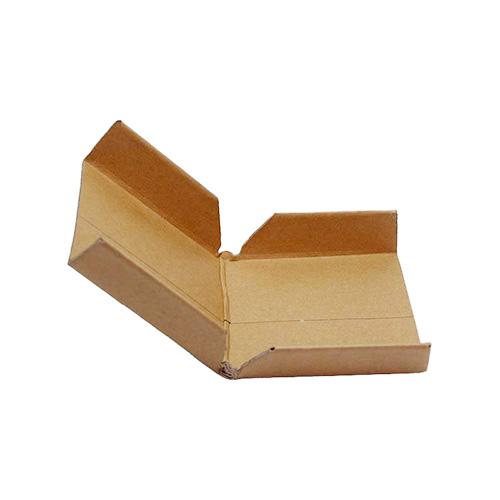
Look at the right Angle: The folded Angle of L-shaped or U-shaped corner guards should be precisely 90 degrees, with straight edges and no distortion or arc-shaped deformation.
Second, measure strength and test toughness
Bending resistance test: Hold one end of the corner guard and try to bend it forcefully. High-quality corner protectors feel hard and tough, and are difficult to bend easily by hand. Even after bending, they have a strong tendency to rebound. Poor-quality corner protectors appear soft and brittle, are prone to bending and deformation, and have poor resilience.
Edge compression test: Pinch and press the edge of the corner guard forcefully with your fingers. High-quality products are firm and hard, and are not prone to indentation. Inferior products feel loose and are prone to being crushed.
Three, inspect the whole and weigh it
Weigh: Under the same size and specification, products with a stronger sense of weight usually use more solid materials, have a higher density, and better compressive resistance.
Overall consistency: For the same batch of products, the color, size and hand sensing remain consistent, which is a manifestation of the stability of the production process.
Summary: The core of high-quality paper corner protectors lies in "tightness, hardness, and straightness" - tight pressing, firm touch, and straight shape. Through the above intuitive observation and simple physical tests, inferior products can be effectively screened out to ensure the reliability of packaging protection.