A 60% reduction in damage rate: A full-chain system approach for stretch film packaging
Full-chain collaboration: Systematically reducing the damage rate of stretch film packaging
To reduce the damage rate of stretch film packaging, systematic control should be implemented throughout the entire chain, including material selection, packaging process, goods management and transportation adaptation.
I. Core Four-Step Control Method
Select the best film and match the strength
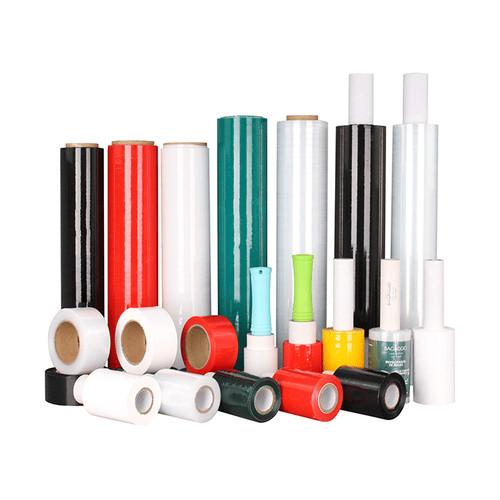
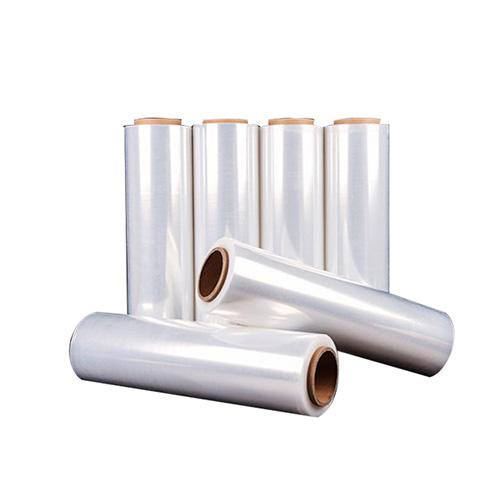
Select as needed: According to the weight of the goods and the sharpness of the edges and corners, choose the film with the corresponding puncture resistance strength and elongation at break. For heavy and sharp goods, thickened or high-molecular reinforced pre-stretched films should be used.
Ensure consistency: Purchase brand-name films with stable quality to avoid local strength deficiencies caused by uneven film thickness and excessive impurities.
Standardized operation, equipment assistance
Pre-stretching for promotion machines: Use a wrapping machine to ensure uniform stretching rate and constant tension, replacing the manual wrapping method with uneven force.
Establish standardized procedures: Clearly define the starting point of winding, the overlap rate (usually 50%-70%), the number of bottom reinforcement turns and the top sealing requirements.
Optimize the status of goods
Neat stacking: Ensure that the palletized goods are stacked flat with the center of gravity centered, and avoid protruding or loose corners becoming stress concentration points.
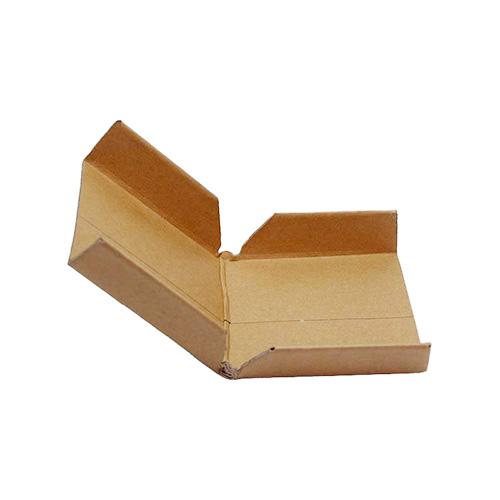
Corner protection first: Pre-wrap sharp parts with paper corner protectors or cushioning materials to disperse the local pressure borne by the film.
Adapt to the transportation environment
Predictive reinforcement: For long-distance, multimodal transport or transportation in poor road conditions, increase the number of film layers or adopt the cross-winding method.
Environmental protection: In extreme environments of high or low temperatures, select films with the corresponding weather-resistant formula.
Ii. Management Closed Loop
Establish a traceability mechanism for damage cases, analyze the root causes of the damage points (whether it is due to membrane material, operation, goods or transportation issues), and make targeted improvements.
Conclusion: The reduction in damage rate is not the result of a single link, but a systematic achievement achieved through a collaborative system of "high-quality materials + standardized equipment + standard operations + predictive protection".