No detector? A practical guide to judging the quality of stretch film by hand in three steps
Three steps to quickly identify quality issues with stretch film
The quality of stretch film can be judged without complex instruments. It can be quickly inspected on-site through the following three steps:
I. Physical Performance Testing
Tensile and rebound test: Take about 30cm of the film section and stretch it at a constant speed with both hands. High-quality film should extend its original length by 2 to 3 times without changing its width, and it should shrink significantly when released. Poor-quality films are prone to breakage, have weak resilience, and become thin and white when stretched.
Puncture strength test: Flatten the single-layer film and puncture it at a constant speed with the tip of a pen. High-quality membranes will delay puncture and the punctures will be small round holes. Poor-quality films, on the other hand, burst with a single poke and tear rapidly.
Ii. Verification of Basic Indicators
Self-adhesive test: Press the film surface with your palm and then lift it. It should feel appropriately sticky and be able to separate easily without any residue. Excessive stickiness (difficult to separate) or lack of stickiness are both formula defects.
Uniformity of thickness: Observe the entire edge of the film roll, which should be flat without waves. Touch the side of the film roll with your hand. High-quality film should be smooth without any unevenness.
Iii. Appearance and Process Inspection
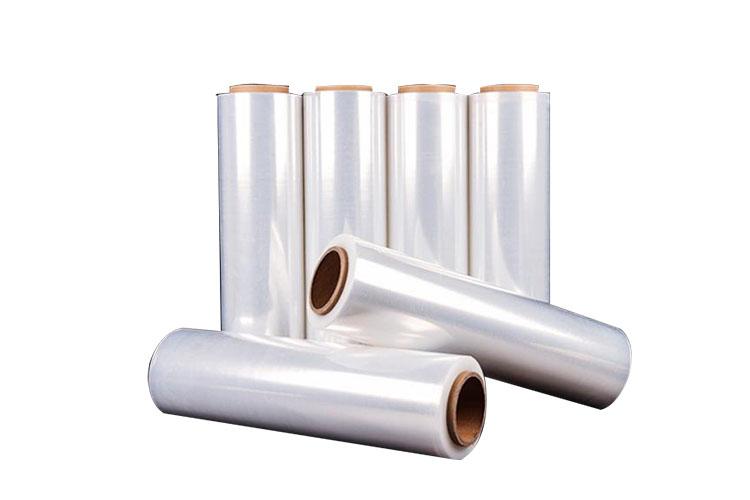
Transparency and color: High-quality PE film appears white and transparent. If the color is yellow, dull or has misty stripes, it may be that recycled materials were used or the process is unstable.
Core and end face: The core should be firm and not deform, and the end face should be flat without excessive glue overflow. Inferior products often have uneven end faces due to uneven tension.
Core quality logic: High-quality stretch film is a precise balance of stretchability, adhesion and toughness. Outstanding performance in a single indicator at the expense of other properties (such as softening the membrane to increase viscosity) is considered a formula defect. It is recommended to insist on sample testing before purchasing and take the actual packaging effect as the final judgment basis.