In-depth analysis of the influencing factors of the tensile properties of stretch film
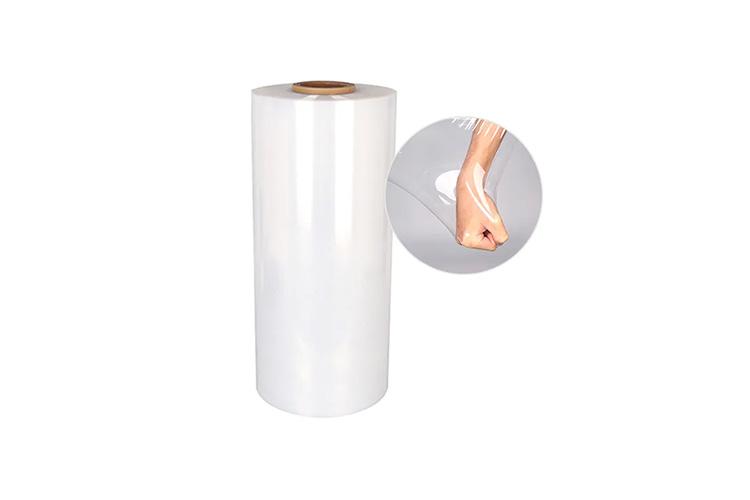
The core influencing factors of the tensile performance of stretch film
Tensile performance is a key indicator for evaluating the quality of stretch film, mainly determined by three dimensions: molecular structure, production process and environmental conditions.
I. Molecular Structure and Material Basis
Resin type and molecular weight: Linear low-density polyethylene (LLDPE) is the mainstream choice due to its excellent ductility caused by its long side chain structure. High molecular weight resins can offer a higher elongation at break.
Blending modification formula: By adding metallocene polyethylene (mPE) or elastomers for modification, the sliding and extensibility of the molecular chain can be significantly enhanced, thereby increasing the tensile rate and tear resistance.
Ii. Production Process and Microstructure
Stretching orientation process: During the blown film or cast film process, by precisely controlling the stretching ratio and stretching rate, the polymer chains are oriented and arranged along the stretching direction. The tensile performance of pre-stretched film is far superior to that of unoriented traditional film.
Cooling and crystallization control: The cooling process affects the crystallinity. Rapid cooling can achieve a more uniform microstructure, which is conducive to the uniform dispersion of stress during the tensile process.
Iii. Product Specifications and Design
Thickness and width: Under the same material conditions, thinner films usually achieve a higher tensile rate, but the puncture resistance strength needs to be balanced. Width affects the uniformity of stretching.
Multi-layer co-extrusion structure: By designing layers with different functions (such as adhesive layers, tough layers, and support layers), tensile properties and other performance aspects can be optimized in a coordinated manner.
Iv. Environment and Usage Conditions
Ambient temperature: Low temperatures will reduce the activity of molecular chains, making the film brittle and reducing its tensile properties. High temperatures may cause the film to soften excessively and lose its effective retraction force.
Stretching rate: In practical use, both too fast and too slow stretching speeds may affect the uniformity and limit value of its final performance.
V. The Impact of Additives
The excessive use of functional additives (such as anti-slip agents and antistatic agents) may interfere with the intermolecular forces and have a negative impact on tensile properties.
Summary: The tensile performance of high-quality stretch film is the result of the synergy of "high-toughness raw materials, precise orientation process, and reasonable structural design". When making a choice, a comprehensive assessment of its formula and process should be conducted, rather than merely focusing on a single value such as thickness or stretch rate.