How does HuleadPack stretch film achieve high tensile strength and low shrinkage rate?
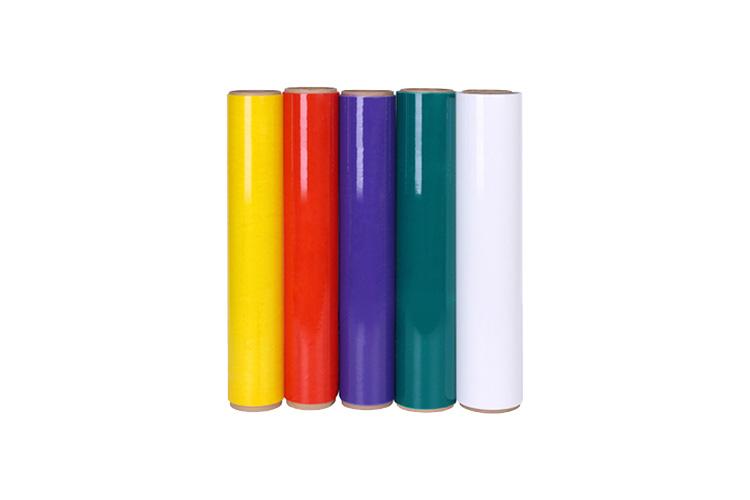
Logistics transportation imposes strict requirements on the performance of stretch films, with high strength and low shrinkage being the key factors.
In the practical scenarios of logistics transportation, the performance flaws of stretch films will be significantly magnified: the film is prone to breaking, causing the package to become loose; or the lack of sufficient shrinkage force leads to the relaxation of the film body, and the goods lose stability after long-distance jolting. HuleadPack deeply analyzed these core pain points and, through material science and process innovation, made its stretch film products achieve an excellent balance in key indicators - high tensile strength and low shrinkage rate, providing a reliable guarantee for logistics safety.
The high tensile strength is attributed to the scientific raw material formula and the orderly extension of the polymer chains.
The foundation for achieving high tensile strength lies in the raw materials and the formula. HuleadPack uses high-quality imported linear low-density polyethylene (LLDPE) as the base resin, and scientifically combines specific proportions of medium-density polyethylene (MDPE), as well as special additives such as tackifiers and toughening agents. This formula system ensures that the molecular chains can extend orderly during mechanical pre-stretching rather than easily breaking, thereby endowing the film with extremely high ultimate tensile ratio and puncture resistance, ensuring that it is not easily damaged even at sharp corners.
The low shrinkage rate is achieved through the synergistic effect of multi-layer co-extrusion technology, locking the stretched state.
To overcome the challenge of low shrinkage rate, more precise process control is required. HuleadPack has introduced an advanced five-layer co-extrusion blown film production line, using the collaborative effect of different raw materials in each layer to "lock in" the stress. The core principle is that after the film is stretched, the inner layer material provides strong adhesion to fit the goods, the middle supporting layer maintains rigidity, and the specially designed outer layer can effectively resist elastic deformation, "fixing" the stretched state. This multi-layer structure significantly reduces the shrinkage caused by the "memory effect" of polymer materials, allowing the wound film to maintain a tight state for a long time. The long-term binding force is much stronger than that of ordinary single-layer films.
HuleadPack stretch film addresses the issue of loose packaging at the material level, ensuring the safety of logistics.
Therefore, HuleadPack stretch film can maintain the initial stability of the packaging unit under harsh conditions, directly addressing the challenges brought by vibration and temperature/humidity changes during logistics. It is a key technical solution from the material perspective that fundamentally resolves the problems of loose packaging and collapsed goods.